One of the great pleasures of astrophysics is doing fun work with fun people. This is an (incomplete) record of the people I have been lucky enough to write papers with, or to help with theirs.
wrote or assisted on a paper togetheranother postone person over timeEqual Earth projection
May be incomplete / wrong
Bovy, Jo
2015-07–presentUniversity of Toronto, Toronto, CAProfessor
2021-09–2024-06Sun Yat-sen University, Guangzhou, CNMPhil in Astrophysics
2017-09–2021-06Lanzhou University, Lanzhou, CNBSc in Physics
Also 4 papers together, from when their ORCID record names no post.
Research Highlights
Extragalactic
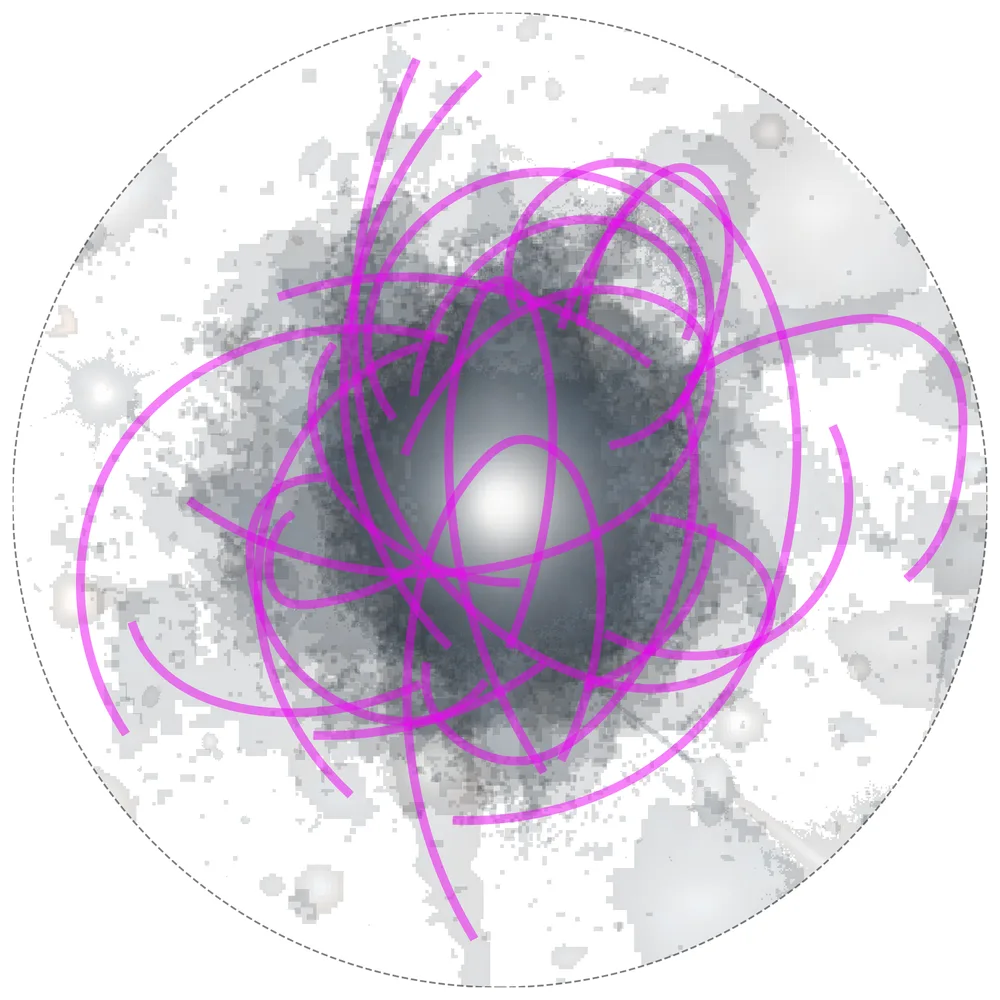
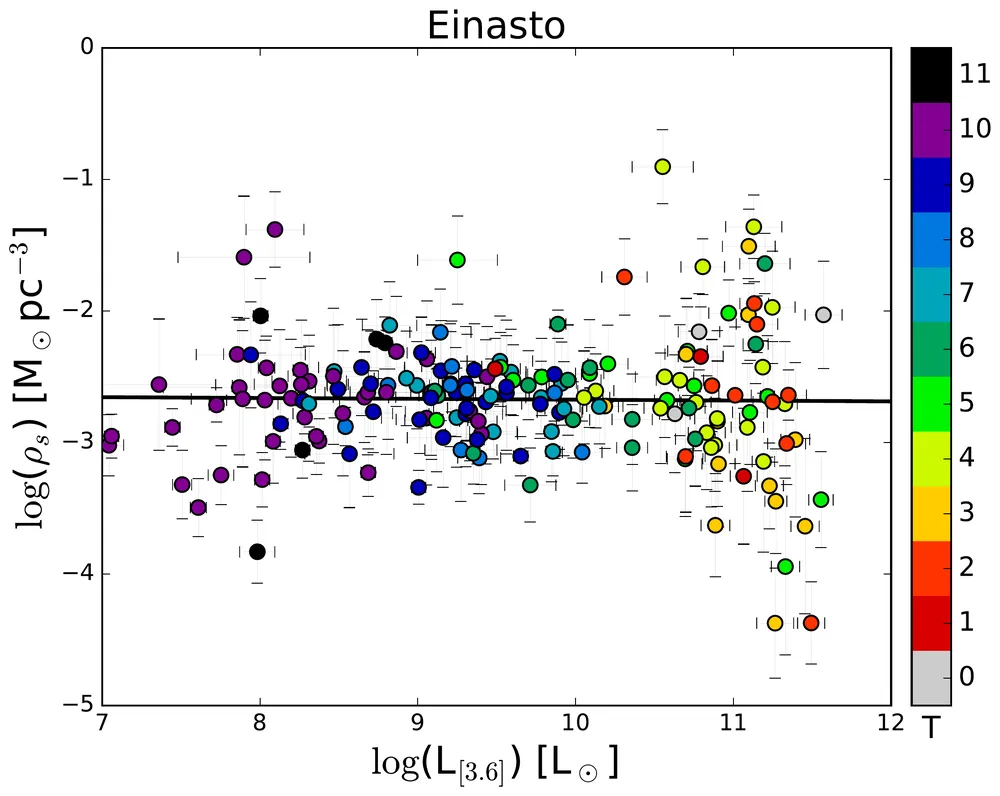
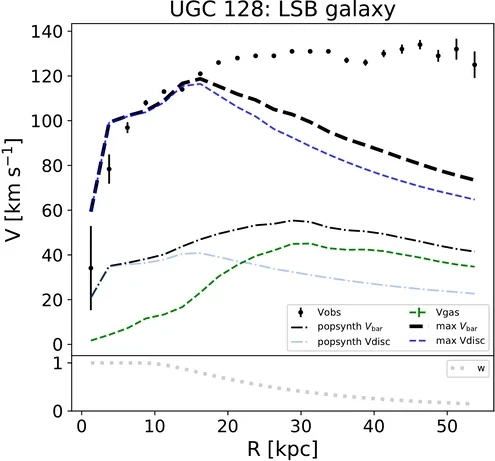
Weighing a galaxy’s dark matter halo is comparatively easy: its rotation curve tells us how much gravitational mass is present. Maximum Discs turned decades of by-eye mass modelling into an algorithm for measuring how much of that gravity can be supplied by stars, while SPARC Halo Density found that haloes have remarkably similar characteristic densities across galaxies spanning five orders of magnitude in brightness. The harder—and more revealing—question is shape. Cold dark matter predicts haloes that are flattened and triaxial; self-interacting dark matter makes them rounder. Stellar streams are ideal probes because their paths trace the gravitational field, preserving a visible record of the halo geometry.
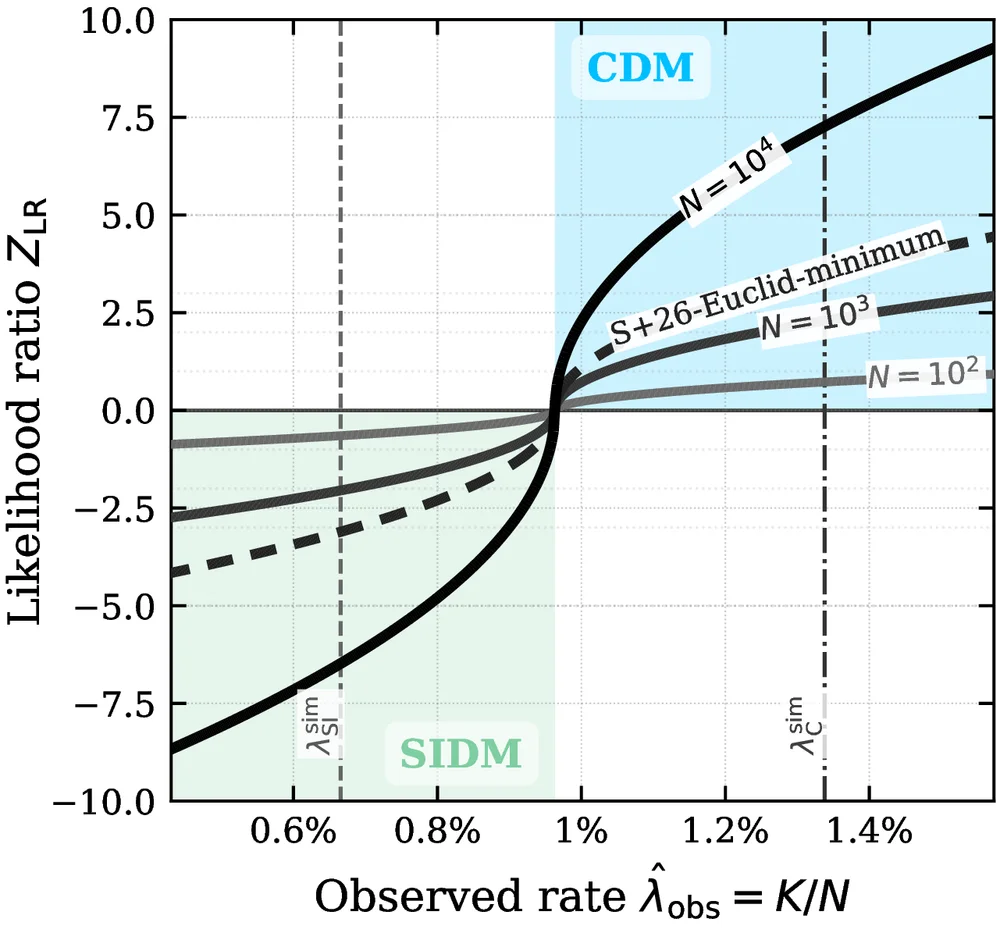
Our work turns that record into a scalable test of dark matter. Potamides showed that projected stream tracks around nearby galaxies can constrain halo shape, using 15 systems; Potamides Software made that inference run in minutes on a laptop. Euclid Extragalactic Streams then took the method beyond the local Universe: it was the first analysis of stellar streams around more distant galaxies, and the first to combine multiple streams in a single joint halo-shape measurement—13 galaxies in Euclid’s first data. The real payoff is statistical: in a round halo, streams cannot curve away from their host galaxy’s centre in projection, while non-spherical haloes can produce such “wrong-way” curves. When Streams Curve Away turns that signature into a population test: across about 10,000 streams, within reach of Euclid, Rubin and Roman, how often those curves appear can distinguish cold dark matter from self-interacting dark matter at up to 5σ.
Potamides is a JAX package that infers a galaxy’s mass distribution from the shapes of its stellar streams.
Potamides is a JAX package that infers a galaxy’s mass distribution from the shapes of its stellar streams. Instead of simulating a stream for every trial potential, it fits the observed track with splines and compares its curvature directly to the potential’s accelerations, covering the pipeline from annotating streams to evaluating likelihoods. Led by Sirui Wu.
arXiv:2609.40057·2026submitted·N. Starkman, J. Nibauer, et al.N. Starkman, J. Nibauer, S. Pearson, et al.N. Starkman, J. Nibauer, S. Pearson, S. Wu‡, L. Necib·arXiv:2609.40057·2026submitted
arXiv:2609.40057·2026submitted
Cold dark matter predicts triaxial halos; self-interacting dark matter rounds them toward spheres.
Cold dark matter predicts triaxial halos; self-interacting dark matter rounds them toward spheres. A stellar stream in a spherical halo can never curve away from its host galaxy’s center in projection, but one in a triaxial halo can. The rate of these convexities tracks halo shape across a population, so catalogs on the scale of Euclid, Rubin and Roman can tell CDM from SIDM at up to 5σ.
Astronomy & AstrophysicsA&A·2026submitted·Euclid Collaboration, N. Starkman, J. Nibauer, et al.Euclid Collaboration, N. Starkman, J. Nibauer, S. Pearson, et al.Euclid Collaboration, N. Starkman, J. Nibauer, S. Pearson, S. Wu‡, M. Walmsley, L. Necib, J. Bovy, F. R. Marleau, et al.·Astronomy & AstrophysicsA&A·2026submitted
Astronomy & AstrophysicsA&A·2026submitted
Euclid is turning up stellar streams around galaxies across a cosmological volume.
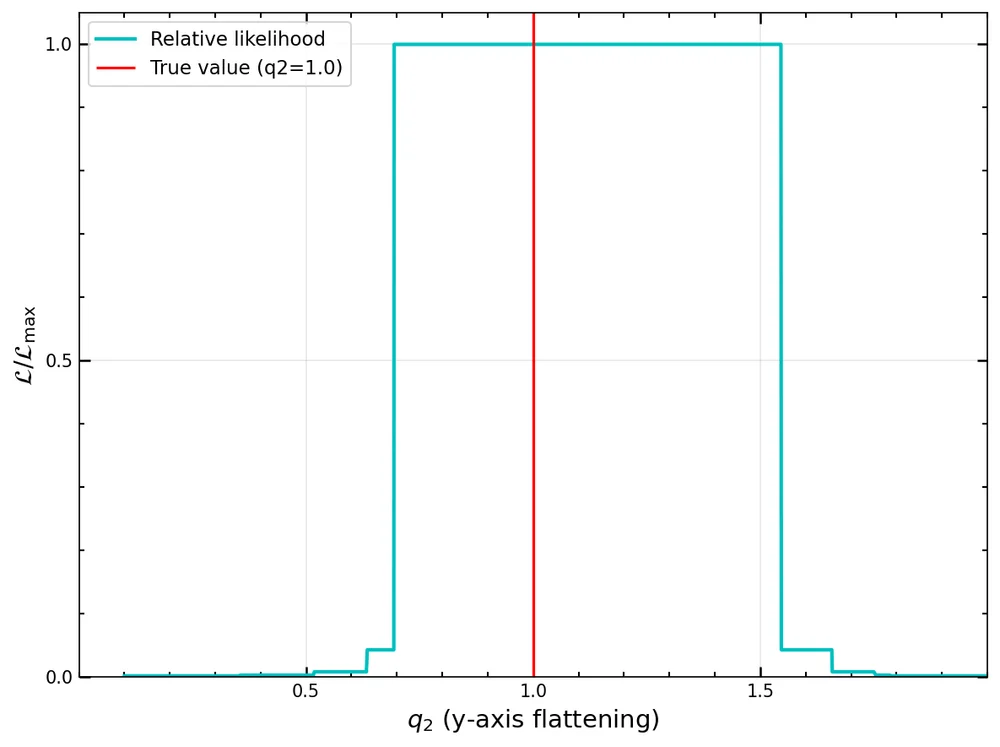
Euclid is turning up stellar streams around galaxies across a cosmological volume. A stream’s shape on the sky constrains the shape and center of its host’s dark matter halo, complementing weak lensing. Across 13 galaxies in Euclid’s first quick data release, halos are consistent with spherical, albeit with a mild preference for flattening, q = 0.95 (+0.05, −0.10), in line with ΛCDM. Thousands more streams are expected over the mission.
The Astrophysical JournalApJ·2026accepted·S. Wu‡, N. Starkman, et al.S. Wu‡, N. Starkman, S. Pearson, et al.S. Wu‡, N. Starkman, S. Pearson, J. Nibauer, J. Miro-Carretero, D. Martinez-Delgado·The Astrophysical JournalApJ·2026accepted
The Astrophysical JournalApJ·2026accepted
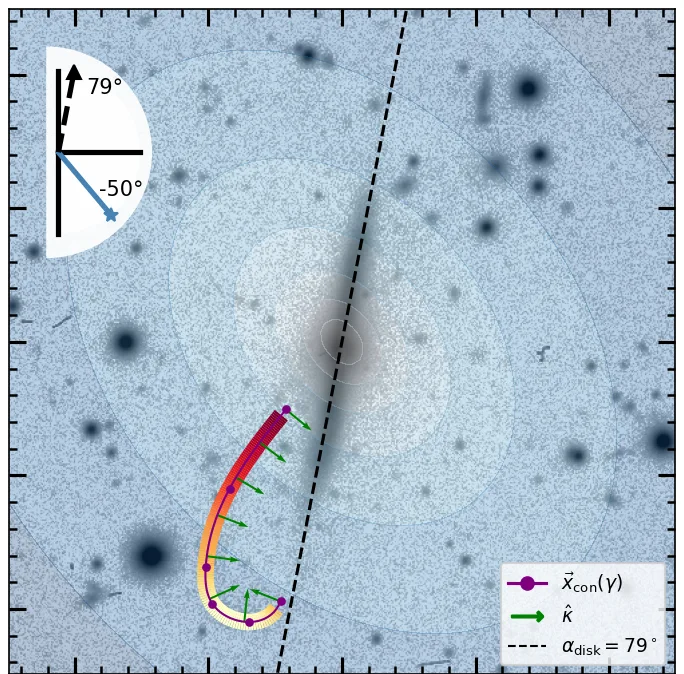
A stellar stream’s curvature traces the pull of its host’s dark matter halo.
A stellar stream’s curvature traces the pull of its host’s dark matter halo. Applied to 15 streams from the Stellar Stream Legacy Survey, Potamides constrains each halo’s projected flattening and orientation. Streams with edge-on loops or sharp turns constrain it most, great-circle-like ones barely at all, and three hint that the stellar disk shapes the inner gravitational field. Led by Sirui Wu.
How dark-matter haloes grow with the galaxies inside them is a direct test of how galaxies form.
How dark-matter haloes grow with the galaxies inside them is a direct test of how galaxies form. Fitting the rotation curves of 175 SPARC galaxies shows that bigger galaxies have bigger haloes, but the haloes’ typical density stays about the same — across galaxies that differ a hundred-thousand-fold in brightness.
A galaxy’s rotation comes from both its stars and its dark matter.
A galaxy’s rotation comes from both its stars and its dark matter. A “maximum disc” gives the stars as much of that rotation as possible, but the term was never precisely defined. A new algorithm measures it across 153 SPARC galaxies: bright galaxies come close to a maximum disc, while faint ones cannot — their stars would have to be unrealistically heavy for their light.
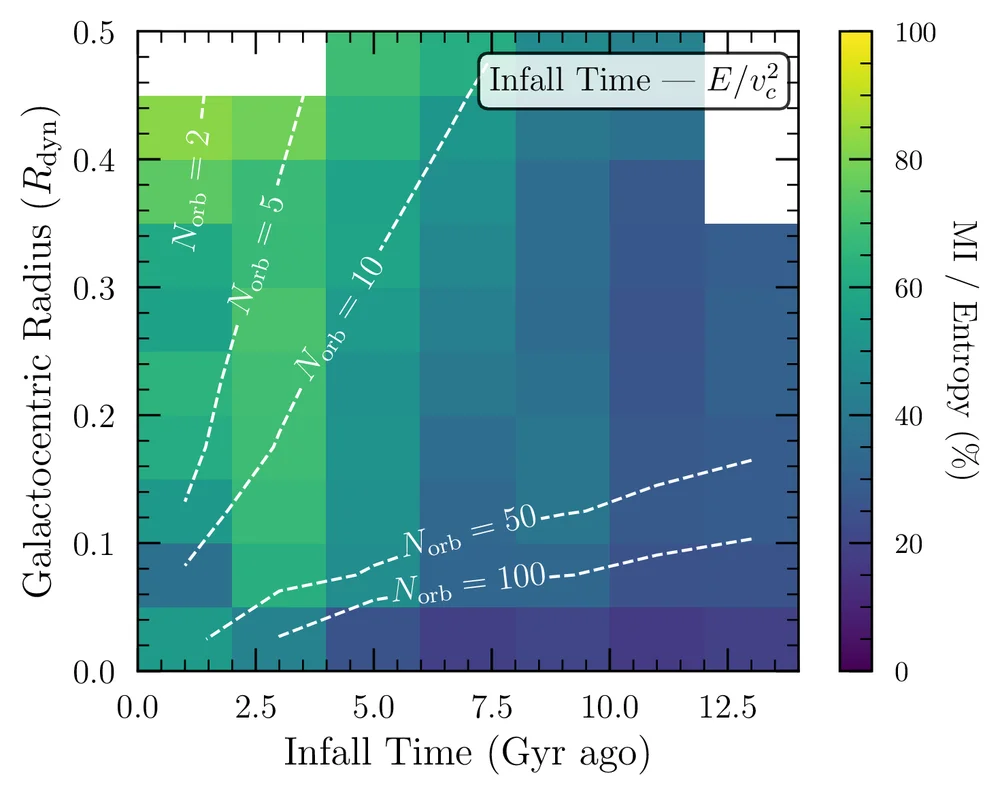
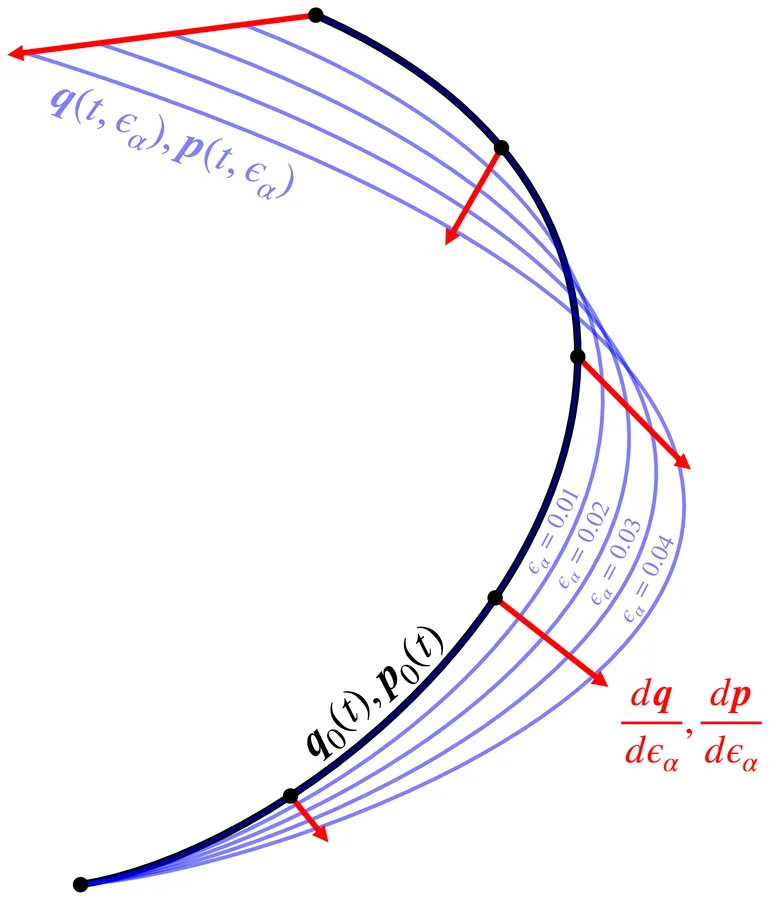
Galaxies forget. Stars that arrived in the same merger are gradually stirred into the Milky Way’s background, erasing the record of how it was assembled. Galactic Amnesia measures this loss of memory: radial velocities forget a merger’s mass and timing within about 5 billion years, but orbital energies retain the signal for more than 10—provided we know the Galaxy’s gravitational potential. Stellar streams are the exception. They are stars stripped from one cluster and stretched along nearly a single orbit, so one snapshot reveals a path that would take a single star hundreds of millions of years to trace. Extended Pal 5 nearly doubled the known length of Palomar 5’s leading tail; Stream Members Only identifies a stream’s members star by star; and On the Fast Track maps a stream’s path in about a second, without assuming a model for the Milky Way.
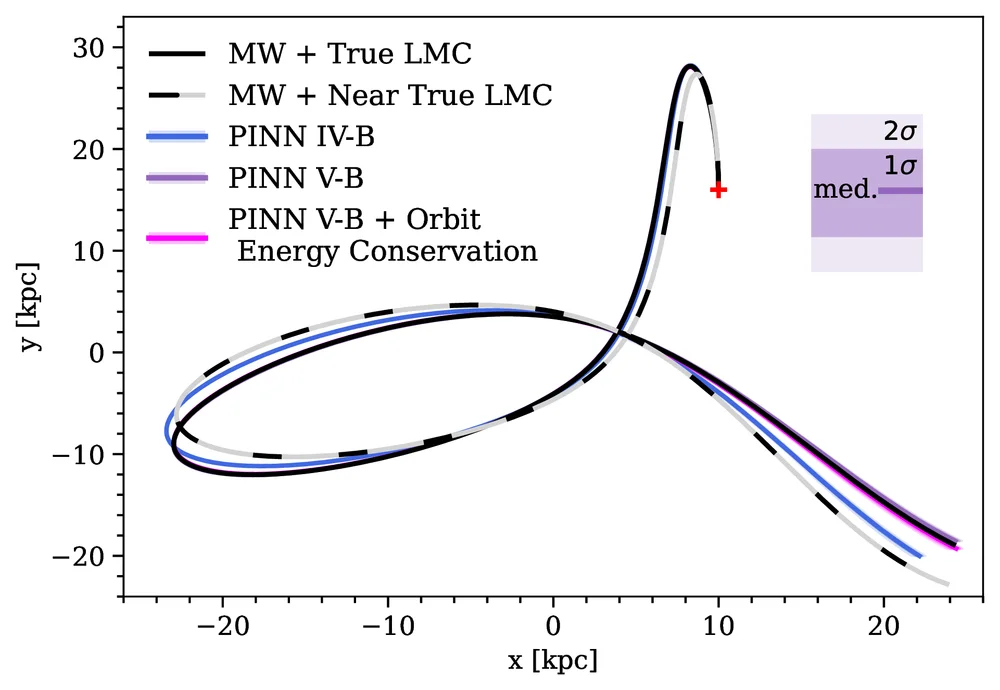
Streams probe dark matter on both large and small scales: the Galaxy-wide gravitational potential that guides their orbits, and the compact dark-matter clumps that perturb them. StreamSculptor finds that GD-1 may have been struck by up to a hundred subhaloes too small to form stars, leaving its stars moving about three times more randomly than an undisturbed stream would—just what cold dark matter predicts. Galactic PINNs learns the potential itself from measured accelerations: tested on simulated Milky Ways, it recovers the influence of both the Galactic bar and the Large Magellanic Cloud even when neither is included in the starting model.
Monthly Notices of the Royal Astronomical SocietyMNRAS·2026submitted·C. Myers†, N. Starkman, et al.C. Myers†, N. Starkman, L. NecibC. Myers†, N. Starkman, L. Necib·Monthly Notices of the Royal Astronomical SocietyMNRAS·2026submitted
Monthly Notices of the Royal Astronomical SocietyMNRAS·2026submitted
A physics-informed neural network learns only the corrections to an analytic galactic potential, so it stays interpretable while reaching sub-percent acceleration errors and more faithful orbits than analytic models alone.
A physics-informed neural network learns only the corrections to an analytic galactic potential, so it stays interpretable while reaching sub-percent acceleration errors and more faithful orbits than analytic models alone. Bayesian and time-dependent extensions add uncertainties and follow the potential as it evolves. Led by undergraduate Charlotte Myers; code in galactoPINNs, first shown at NeurIPS 2025.
arXiv:2605.04138·2026submitted·L. Necib, …, N. Starkman, et al.L. Necib, …, N. Starkman, et al.L. Necib, D. Folsom, E. Y. Davies, N. Starkman, A. Thoyas·arXiv:2605.04138·2026submitted
arXiv:2605.04138·2026submitted
Mergers leave fingerprints on a galaxy’s stars, but orbits mix and the record fades.
Mergers leave fingerprints on a galaxy’s stars, but orbits mix and the record fades. In 98 simulated Milky Ways, a merger’s imprint on stellar energy outlasts 10 Gyr, while radial velocity forgets within about 5 Gyr. To read the Milky Way’s past, we first need its potential.
Stellar streams are sensitive to the smallest dark matter subhalos.
Stellar streams are sensitive to the smallest dark matter subhalos. StreamSculptor uses Hamiltonian perturbation theory to model streams in time-dependent potentials, capturing the LMC and the Galactic bar alongside the dozens of subhalo impacts expected for streams like GD-1 and Pal 5. A stream’s velocity dispersion then ties directly to dark matter physics, giving a fast way to model whole stream populations from dark matter properties. Led by Jacob Nibauer.
Using a stellar stream to weigh the Milky Way’s dark matter starts with knowing which stars belong to it.
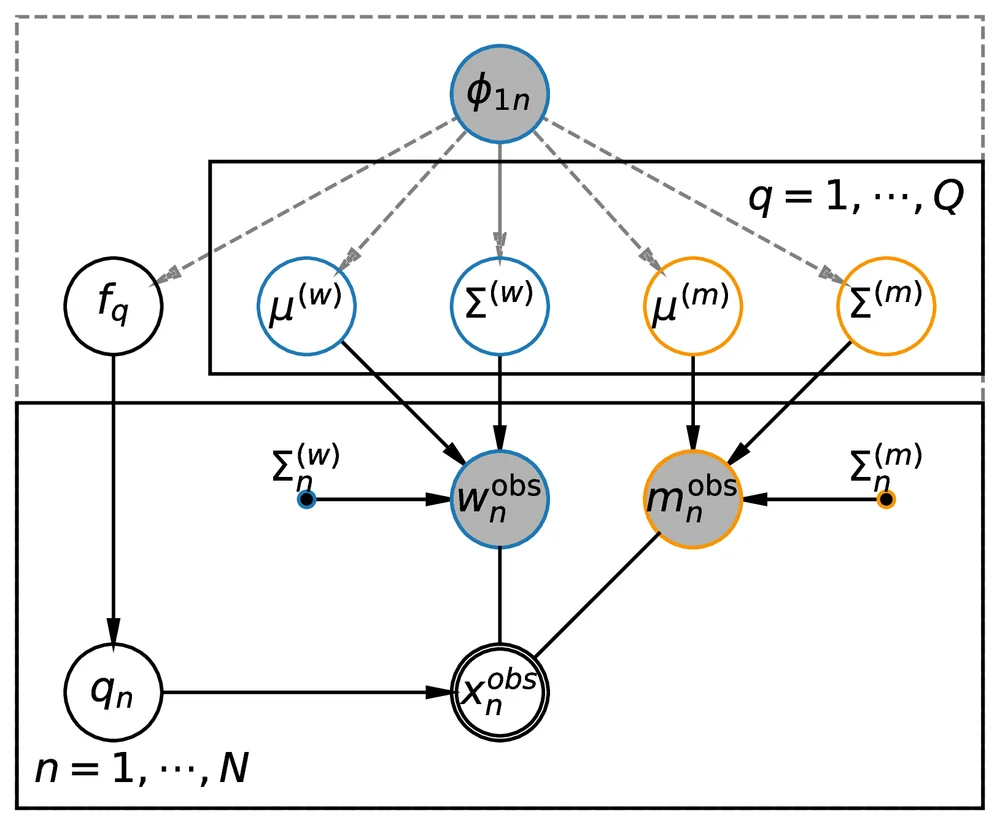
Using a stellar stream to weigh the Milky Way’s dark matter starts with knowing which stars belong to it. Mixture density networks model a stream’s track, width, density and kinematics from all the available astrometry and photometry, with normalizing flows for the background, even where phase-space data are incomplete. Applied to GD-1 and Palomar 5, the result is public catalogs of stellar membership probabilities.
Comparing a stellar stream to simulations first needs a clear map of the stream’s path.
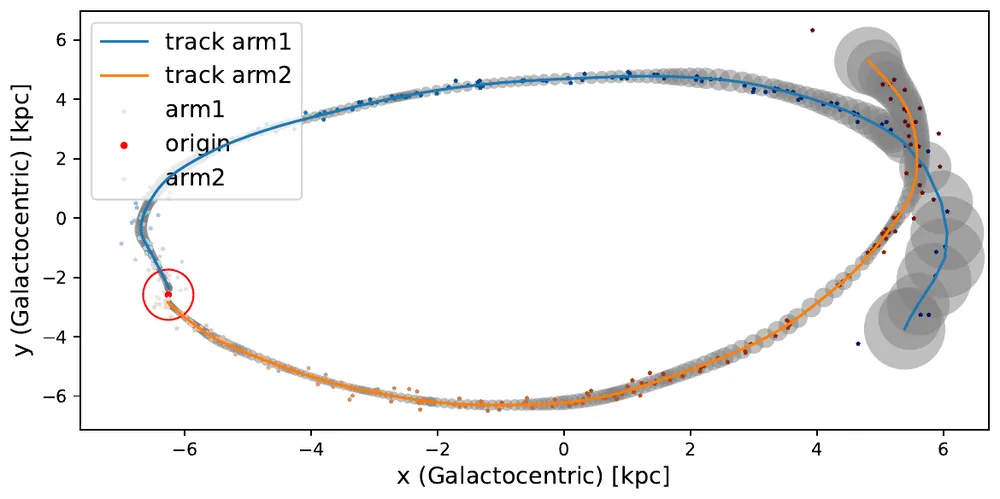
Comparing a stellar stream to simulations first needs a clear map of the stream’s path. This method puts the stars in order along the stream, then traces the path and its uncertainty — without assuming any model of the Galaxy. It works on simulated streams and on real ones like Palomar 5 and GD-1, and is available as the Python package TrackStream.
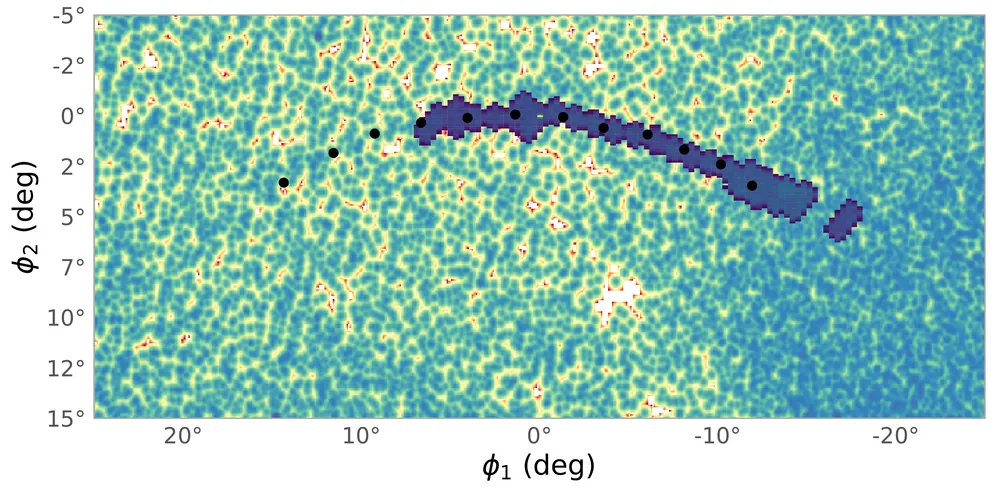
Palomar 5 is a star cluster being pulled apart by the Milky Way, leaving two tails of stars that trace the Galaxy’s gravity.
Palomar 5 is a star cluster being pulled apart by the Milky Way, leaving two tails of stars that trace the Galaxy’s gravity. Gaia data show its leading tail runs about 7° further than was known, making the stream about 30° long. The two tails come out roughly equal, which limits how much the Galactic bar can have cut one short.
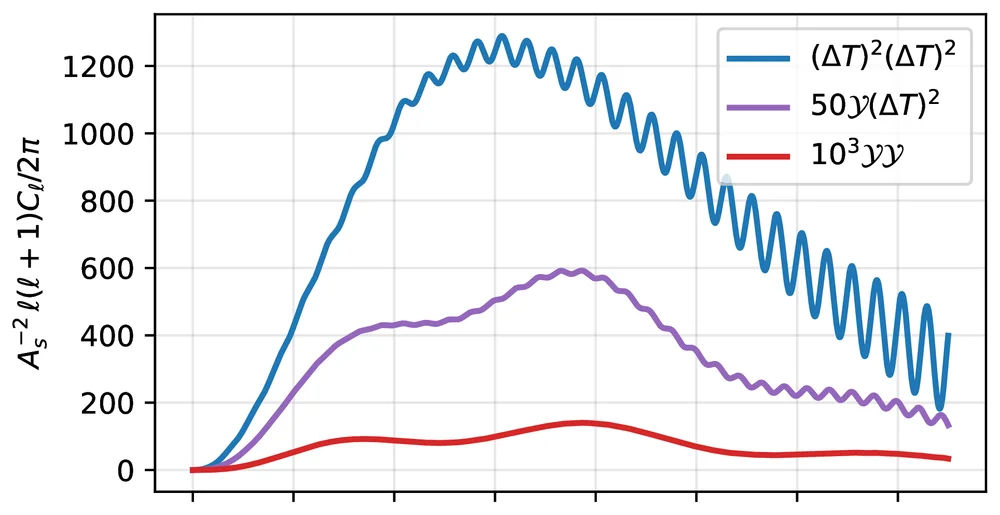
The cosmic microwave background is almost a perfect blackbody, but its tiny spectral distortions contain information that its temperature map cannot provide. In CMB Spectrum Distortions, we calculate a signal that standard cosmology must produce. As the Universe became transparent, photons diffused out of hotter and colder regions, mixing blackbodies with slightly different temperatures. That mixing created a faint Compton y-distortion that is largest where the temperatures being mixed differ most, so it correlates with the squared temperature map. That correlation should already be detectable with ACT and SPT, at a signal-to-noise of about 12, opening a new observational test of early-Universe physics.
As the universe became transparent, the photons reaching us from any one direction last scattered off regions at slightly different temperatures.
As the universe became transparent, the photons reaching us from any one direction last scattered off regions at slightly different temperatures. Blending those blackbodies leaves a small Compton y-distortion in the CMB spectrum. Its cross-correlation with the squared temperature fluctuations should already be detectable by ACT and SPT, at a forecast signal-to-noise of about 12, and CMB-S4 could turn it into a new cosmological probe.
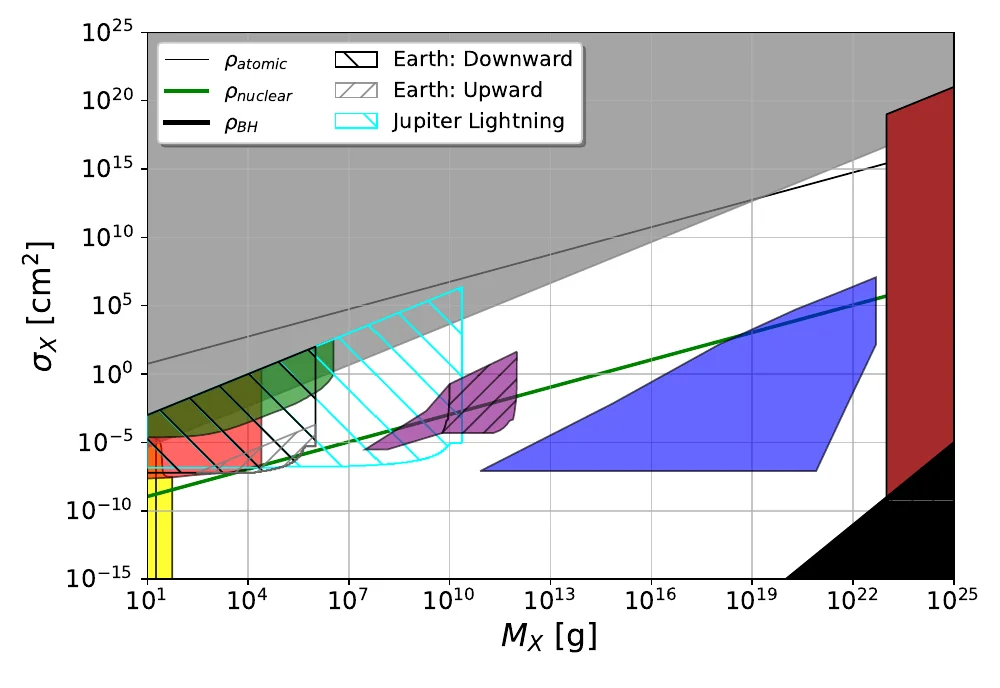
Direct detection usually means placing a shielded detector underground and waiting for a dark-matter particle to scatter. But if dark matter comes in macroscopic objects—far heavier, and therefore far rarer, than ordinary particle candidates—no laboratory detector is large enough to expect an encounter. In Macro Lightning, we turn the atmosphere into the detector instead. A macro passing through a thunderstorm would leave a long, straight channel of ionized air that could seed a lightning bolt straight as a ruler, unlike the jagged bolts produced by ordinary storms; the odds of ordinary lightning running even ten steps that straight are about 3 in 10 trillion. Searching for straight lightning on Earth, or even on Jupiter, turns thunderstorms into planet-sized dark-matter experiments.
Dark matter might be large objects — macros — rather than tiny particles.
Dark matter might be large objects — macros — rather than tiny particles. A macro passing through a thunderstorm would trigger a perfectly straight lightning bolt, unlike the jagged bolts we normally see. Looking for straight lightning on Earth, or on Jupiter, could test this idea.
Mar 2022Astropy Core Developer Conference (Talk)attendedThe future of interoperability with Python's Protocols Role: Core developer, maintainer for Astropy Cosmology and Units
May 2018CWRU SOURCE Intersections (Poster)contributedA new algorithm to quantify maximal disks
Oct 2017CWRU Physics Seminar (Talk)contributedUnderstanding the Dark Matter distribution in galaxies using maximal disks
Aug 2017CWRU Astronomy Summer Seminar (Talk)contributedUnderstanding the Dark Matter distribution in galaxies using maximal disks
Jun 2017Dwarf Galaxies on the Shoulders of GiantscontributedWorkshop on topics related to dwarf galaxies and the dark matter problem Conference Volunteer
2017Cosmology Overview at CWRU Origins (Talk)invited talkThe Universe: A Brief History
College Station, TX, USA 1 talk
Oct 2025Texas A&M Seminar (Texas)invited talkThe Geometry of Dark Matter Halos from Extragalactic Streams
Copenhagen, Denmark 3 talks
Jun 2026DARK Seminar (Talk)contributedEnergy Structures of Extragalactic Stellar Streams Reveal Dark Matter Halos
Oct 2025DARK seminar (Copenhagen)invited talkThe Geometry of Dark Matter Halos from Extragalactic Streams
Mar 2025DARK seminar (Copenhagen)invited talkBayesian models for detecting streams in LSST data
Córdoba, Spain 1 talk
Oct 2025IAUS 403 (Talk)contributedEuclid: The Geometry of Dark Matter Halos from Extragalactic Streams
Durham, UK 1 talk
Aug 2024Streams 24: The theory edition (Talk)contributedFrom JAX to Galax, a new generation of stellar stream tools Using ML to select stellar stream members
Hamilton, ON, Canada 1 talk
Jul 2019ComSciCon Canada 2019attendedSelected participant at Canada’s first national science communication workshop for graduate students
Ithaca, NY, USA 1 talk
Aug 2016Cornell CLASSE Summer Seminar (Talk)contributedCoherent curvature radiation in a neutron star’s monopolar magnetic field
Jesi, Italy 2 talks
Aug 2026Astrophysics and Space Science in Marche III: Big Bang, Big Stars, Big ComputersorganisedRole: SOC
Aug 2026Marche III: Big Bang, Big Stars, Big Computers (Jesi)invited talkEnergy Structures of Extragalactic Stellar Streams Reveal Dark Matter Halos
Lausanne, Switzerland 2 talks
Jun 2026EAS 26-S10 (Lausanne)invited talkThe Geometry of Dark Matter Halos from Extragalactic Streams
May 2025Euclid LU-SWG (Talk)contributedExtra-Galactic Gravity using Streams (EGGS) from Euclid's Zoo(niverse)
New York, NY, USA 2 talks
Sep 2025CCA Software seminar (NYC)invited talkunxt, coordinax, and software development in JAX
Sep 2026Astropy 2026 ConferenceorganisedRole: Coordination Committee and Strategic Planning Committee; moderated online discussion and helped moderate the AI sessions.
Mar 2022Oxford Physics Colloquiuminvited talkStraight Lightning as a Signature of Macroscopic Dark Matter (Invited Colloquium Talk)
Oct 2021Origins Science Scholars Lecture Seriesinvited talkScience of Origins: Dark Matter and the Milky Way
Jul 2021ComSciCon GTA 2021organisedRole: Organizing Committee member for the Toronto ComSciCon – a workshop series for graduate students on science communication skills
Jun 2021AAS 2021 (Talk)contributedAstropy Tutorials on Units & Constants, Coordinates, and Cosmology
May 2021CASCA AGM (Poster)contributedStraight Lightning as a Signature of Macroscopic Dark Matter
May 2021CASCA AGM (Poster)contributedStellar Stream Track Reconstruction, with Errors
Aug 2020Johns Hopkins University Physics Journal Clubinvited talkStraight Lightning as a Signature of Macroscopic Dark Matter
Aug 2020STScI 2020 The Local Group: Assembly and Evolution Symposium (Poster)contributedConstraints on Milky Way Halo Triaxiality from Palomar 5
Jul 2020ComSciCon GTA 2020organisedRole: Organizing Committee member for Toronto’s first ComSciCon
Oct 2022CATS-2022contributedStreams22: A workshop for assembling a Community Atlas of Tidal Streams
Pittsburgh, PA, USA 1 talk
Oct 2023DESC sprint weekcontributed
Portoferraio, Italy 1 talk
Sep 2025Cosmology 2025 (Talk)contributedEuclid: The Geometry of Dark Matter Halos from Extragalactic Streams
Portsmouth, UK 1 talk
Dec 201930th Texas Symposium On Relativistic Astrophysics (Talk)contributedResolving the Recombination Visibility Function Width Tension Awarded best graduate student presentation